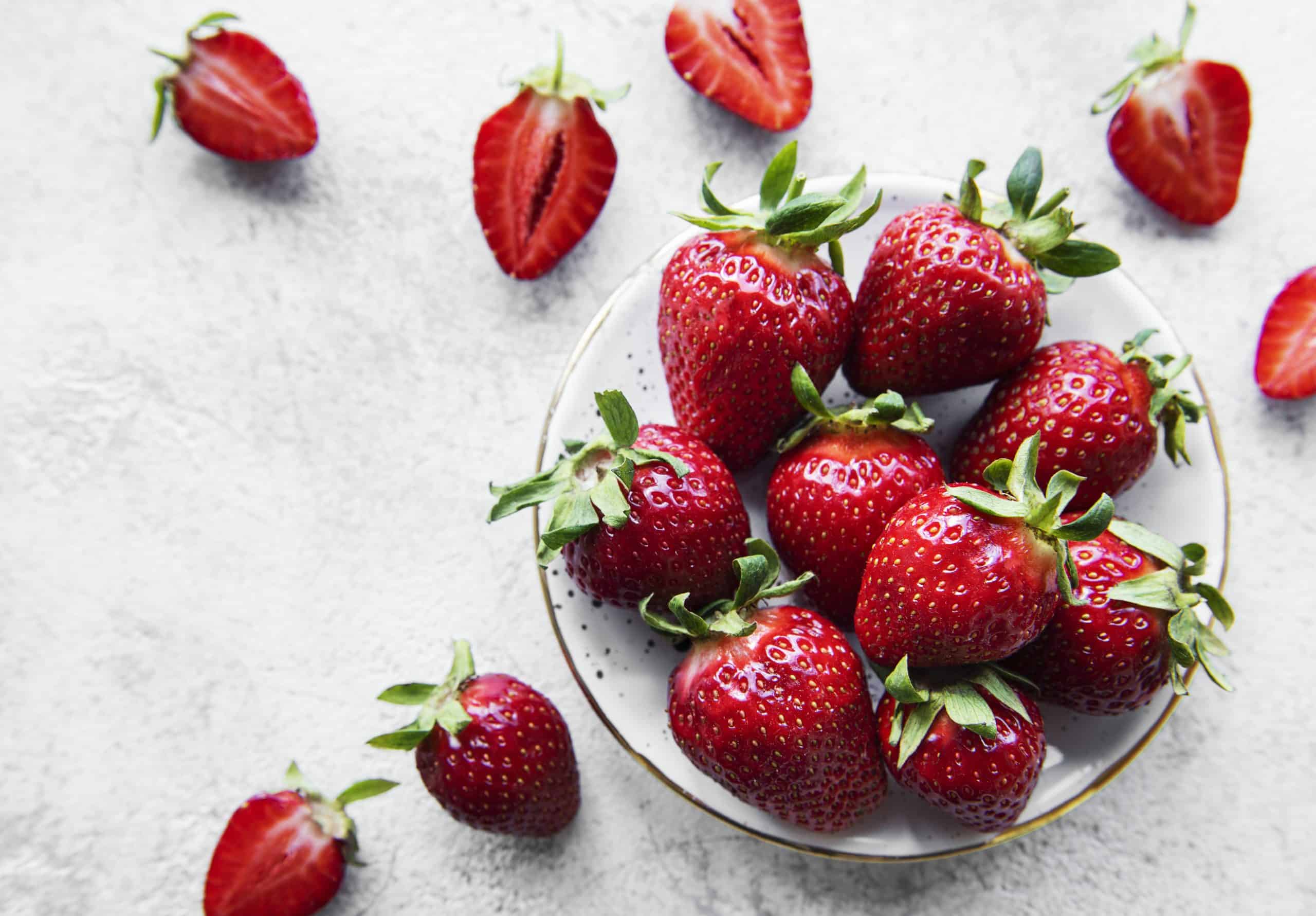
Let’s talk about one of my favorite fruits: strawberries! The sunshine state is known as the winter strawberry capital of the world! Growing strawberries in Florida isnt complicated if selection and timing are right! This post will guide you through choosing the best varieties for Florida, the ideal planting times, soil preparation, and care methods to help you successfully grow strawberries at home.
Life cycle and growing conditions
Before discussing which varieties are best suited for Florida, it’s essential to understand how strawberries grow. Strawberries are perennial plants, meaning they live and produce fruit for more than one season before their lifecycle ends. However, in Florida and other warm climates, strawberries are grown annually as the excess heat and humidity tend to kill or damage the plants after one growing season.
Ideally, strawberries require around 8 hours of direct sunlight to grow. They also prefer the pH in the lower range of the spectrum (5.5-6.5). In my personal experience growing them, they prefer a well mended soil in order to produce as much as they should. This means that prior to planting, compost and fertilizer application should be accounted for.
In commercial operations, strawberries are normally grown in mounds to improve drainage, control soil moisture, and reduce disease risks. The state’s high humidity and heavy rainfall can lead to waterlogged soil, which strawberries do not tolerate well. The mounds are often covered with black polyethylene sheeting to help reduce weeds and keep the berries off the ground (this also helps to reduce produce loss to fungus and certain pests).
For home growers, I recommend using raised beds or towers. Raised beds tend to make it easier and more accessible for gardeners. One of my favorite strategies during strawberry season is to plant them in the corners of my raised beds. This trick makes use of the plant’s compact size and allows me to guide the berries to hang over the edges. It not only maximizes space but also keeps the fruit off the soil, making harvesting easier and reducing the risk of rot.
Varieties

If you have been victimized by one of those Facebook videos where they teach you how to grow strawberries by using store-bought berries seeds, click here (just kidding). Although growing strawberries from seeds is entirely possible, this option is just not the most reliable for a few reasons. The first one is genetic variability; strawberries grown from seeds may not be true to their parent plant. Many varieties are hybrids, so seeds might produce plants with different characteristics and often inferior fruit quality compared to their parent plants (If you have read any of my blog posts, you are probably tired of reading me talking about variety selection and drip irrigation haha). The other reason why growing from seeds is not the best option is that the time and effort involved in growing from seeds are much greater than those of other methods.
Instead of starting from seeds, using bare-root plants or transplants is the more practical and reliable method for growing strawberries in Florida. Bareroot plants and transplants are already established and provide a head start on growth, meaning they will produce fruit much sooner—usually within the first season. They often look half-dead whenever I purchase them but bounce back really quickly if planted right!
One of the key advantages of using bare-root or transplant plants is their uniformity. Since they are typically cloned from a parent plant, you know exactly what variety you’re getting, and you can expect consistent fruit size, flavor, and yield. In a climate like Florida’s, where the growing season can be short and temperatures can be unpredictable, starting with strong, healthy plants makes all the difference.
Some of the best varieties to grow in Florida include ‘Festival,’ ‘Florida Radiance,’ and ‘Brilliance.’ These varieties are known for their ability to thrive in Florida’s warm winters and produce high yields of flavorful berries. I have experience with ‘Festival’ and ‘Florida Radiance’; both performed really well for us!
Soil and Fertility
I recommend mending the soil prior to planting/transplanting with well-aged manure or compost and organic citrus tone by spoma (click here to buy) . The University of Florida recommends using a 10-5-10 fertilizer; however, this specific ratio is typically only available in inorganic options. Additionally, it’s advised to amend the soil with azomite (click here to buy) at the appropriate rate to provide essential micronutrients.
As the season progresses, it’s advised to reapply fertilizers every 4-6 weeks to ensure the soil is not depleted of nutrients. Always read the instructions provided on the back of the fertilizer bags! They provide the most accurate guide on how to apply, how much to apply, and how often!
Disease and pests

Common Diseases:
- Gray Mold (Botrytis cinerea)
- Symptoms: Grayish, fuzzy mold on the fruit, particularly after wet weather.
- Management: Improve air circulation by spacing plants properly, use mulch to keep fruit off the soil, and apply fungicides if necessary.
- Powdery Mildew
- Symptoms: White, powdery spots on leaves, causing leaf curling and stunted growth.
- Management: Use sulfur-based fungicides and ensure good airflow between plants to reduce humidity.
- Anthracnose Fruit Rot
- Symptoms: Dark, sunken lesions on fruit that may spread quickly in warm, wet conditions.
- Management: Avoid overhead watering, apply fungicides, and practice crop rotation.
- Leaf Spot (Mycosphaerella fragariae)
- Symptoms: Small, purple spots on leaves that can lead to defoliation if severe.
- Management: Remove affected leaves, apply fungicides, and ensure proper spacing for good airflow.

Common Pests:
- Spider Mites
- Symptoms: Tiny, spider-like pests that cause stippling and yellowing of leaves. Severe infestations can lead to plant death.
- Management: Spray with insecticidal soap or neem oil, and keep plants well-watered as mites thrive in dry conditions.
- Thrips
- Symptoms: Small insects that cause deformed fruits and leaf damage by sucking plant juices.
- Management: Use insecticidal soap or neem oil, and encourage natural predators like ladybugs
- Aphids
- Symptoms: Small, soft-bodied insects that cluster on new growth, causing curling and yellowing leaves.
- Management: Use insecticidal soap or water sprays to remove them and introduce beneficial insects like ladybugs.
Harvest and storage
In Florida, strawberries are typically ready for harvest between November and April. The best time to pick them is when they are fully red, as strawberries do not ripen further once harvested. For optimal storage, refrigerate them unwashed and dry in a breathable container for up to a week. If you want to store them longer, consider freezing the berries after removing the stems, as this will preserve their flavor and quality.
Conclusion
Just like everything in Florida, timing and variety selection are essential to ensure success.