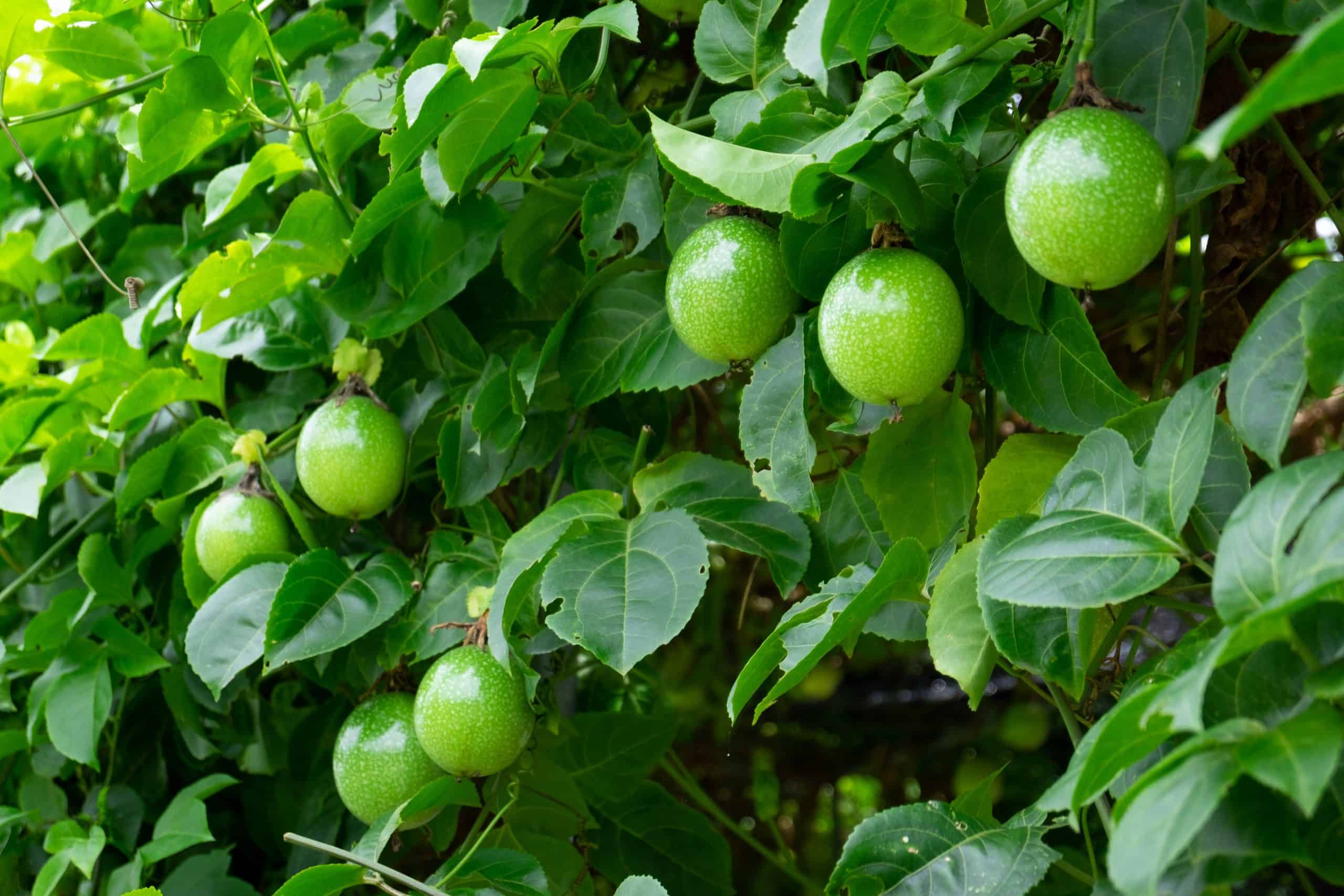
Passion fruit (maracuja or macuya) is a tropical fruit native to South America, specifically the regions of Brazil, Paraguay, and northern Argentina. Known for its unique, tangy-sweet flavor, the fruit has a tough, colorful outer skin (purple or yellow). Indigenous peoples in its native range have cultivated passion fruit for centuries, valuing it both as a nutritious food and for its medicinal properties. In my personal experience, this is one of the easiest fruits to grow for those located in zone 9 and above.
The name “passion fruit” comes from the shape of the plant’s flowers, which early Christian missionaries in South America associated with the Passion of Christ. They interpreted the flower’s structure as a symbol of the crucifixion, with elements representing the crown of thorns, nails, and wounds. This religious connection inspired the name, and its exotic appeal contributed to its popularity worldwide.

How to plant passion fruit from seeds?
To plant passion fruit from seeds (fresh seeds are preferred as they have higher germination rates than older ones), start by extracting seeds from ripe fruit and rinsing off the pulp. To improve germination, the seed coat can be scarified by nicking the edge with a sharp blade and soaking the seeds overnight in water. Allow the seeds to dry for a day or two before planting. Use a well-draining seed-starting mix and sow the seeds about ½ inch deep in small pots or trays. Keep the soil moist but not waterlogged, and place the pots in a warm, sunny location. Germination typically takes 10-20 days, but it can be slower in cooler conditions.
High humidity is essential for germination and can be maintained by covering the containers with plastic or humidity domes. Seeds germinate best in warm conditions, around 85°F, and typically sprout within 10 to 21 days. Once germinated, seedlings should be kept in partial shade to prevent sunburn, as young plants are sensitive to direct sunlight. I recommend waiting until the risk of frost is over before transplanting seedlings. Older plants can handle frost (mostly getting damaged in the outer leaves). I recommend avoiding pruning during fall and winter.
How to propagate passion fruit from cuttings?

Passion fruit can be propagated through cuttings taken from healthy. To prepare a cutting, select a healthy vine and cut a section containing at least two nodes. Remove all leaves except for the top one, and ensure you identify the bottom end of the cutting based on the vine. Dip the bottom of the cutting in rooting hormone ( click here to purchase) to promote root development, then plant it 2–4 inches deep in clean growing media. I recommend keeping the cutting in a humidity dome or cover with a partially open Ziploc bag until rotting occurs.
How to Passion fruit varieties and cultivars

The most commercially cultivated variety of passion fruit in the United States is the purple passion fruit (Passiflora edulis). While P. edulis is the most widely cultivated species, several other species within the Passiflora genus hold agricultural importance. The sweet passion fruit (P. alata) produces yellow to orange fruit, while the sweet granadilla (P. ligularis) features a bright orange shell when ripe. Another notable species is P. incarnata, often referred to as “maypop” or “passion flower” (distinct from P. edulis). Native to the southern United States, it is the most cold-hardy of the genus. Its fruit, which ranges from yellow to green, has a taste that is mild to slightly sweet, making it less popular for consumption but still valued for its adaptability.
I’ve grown both P. edulis (purple passion fruit) and P. alata (yellow passion fruit), and I adore them for different reasons. The purple variety is smaller but sweeter, while the yellow variety offers larger fruit with a tangy flavor. Their fruiting seasons also vary: P. edulis typically bears fruit in spring, summer, and early fall, whereas P. alata fruits during winter and spring.
Passion Fruit Growing zones
Passion fruit thrives in warm, tropical, or subtropical climates, making USDA growing zones 9–11 ideal for most varieties. In these zones, the plants can grow year-round with minimal risk of frost. However, with proper care and protection, passion fruit can be grown in northern regions of the United States as well, typically as a container plant or in greenhouses. Frost-sensitive species like Passiflora edulis (purple passion fruit) and P. edulis flavicarpa (yellow passion fruit) require warm temperatures and may struggle and die outdoors in areas with harsh winters.
For northern regions, the cold-hardy Passiflora incarnata, commonly known as maypop, is an excellent choice. Native to the southeastern United States, maypop can survive in USDA zones as low as 6, tolerating freezing temperatures with proper winter mulching. It produces small, green to yellow fruits with a mild, slightly sweet flavor. While not as popular for eating fresh as tropical varieties, maypop is prized for its adaptability and vibrant flowers, which add ornamental value to northern gardens.
Passion fruit fertilizer schedule
Passion fruit plants require a consistent fertilizer schedule to thrive and produce abundant fruit. During the early growth stage, focus on providing nitrogen-rich fertilizers to promote healthy vine and foliage development. Apply a balanced fertilizer with an NPK ratio of 4-3-2 (click here to shop) or similar every 4–6 weeks during the first six months. Alternatively, organic options like well-aged compost can provide extra nutrients. Ensure the soil remains well-draining and moist, as over-fertilizing or poorly drained soil can damage young plants.
Once the plants mature (after six months), adjust the fertilizer schedule to align with their fruiting cycle. During spring and summer, when passion fruit plants are actively growing and producing fruit, fertilize every 4–6 weeks with a blend high in potassium to support flowering and fruiting. Reduce fertilization in fall and winter as growth slows, especially in cooler climates.
Harvesting

Passion fruit is typically ready to harvest when the fruits naturally drop from the vine, indicating they are fully ripe. The outer skin should be vibrant in color—purple, yellow, or orange, depending on the variety—and may have a slightly wrinkled texture, signaling peak ripeness and sweetness. Fallen fruits should be gathered promptly to prevent spoilage or pest damage. If harvesting directly from the vine, gently twist the fruit to avoid harming the plant. Ripe passion fruit can be stored at room temperature for a few days or refrigerated to extend freshness.
FAQ

FAQ
When passion fruit normally flowers?
Passion fruit plants typically flower during warm seasons. Depending on the species and local growing conditions, flowering often occurs from late spring to early summer, though in some regions with consistent warmth, they may flower year-round. To encourage blooming, passion fruit plants require ample sunlight, well-draining soil, and regular watering, along with occasional pruning to promote healthy growth. The two varieties I grow purple possum and yellow possum flowers at different times. The purple flowers March-September, and the yellow flowers September-December.
How do you eat passion fruit?
I personally like to eat directly from the fruit (all the seeds are edible and provide a satisfying crunch) or add to smoothies (you will need to blend it separately with a little bit of water and strain the seeds). Passion fruit pulp can also be added to smoothies, yogurt, desserts, or salads. If the seeds aren’t preferred, the pulp can be strained for its juice, which is excellent in drinks and sauces. Some enjoy sprinkling a little sugar or honey over the pulp.