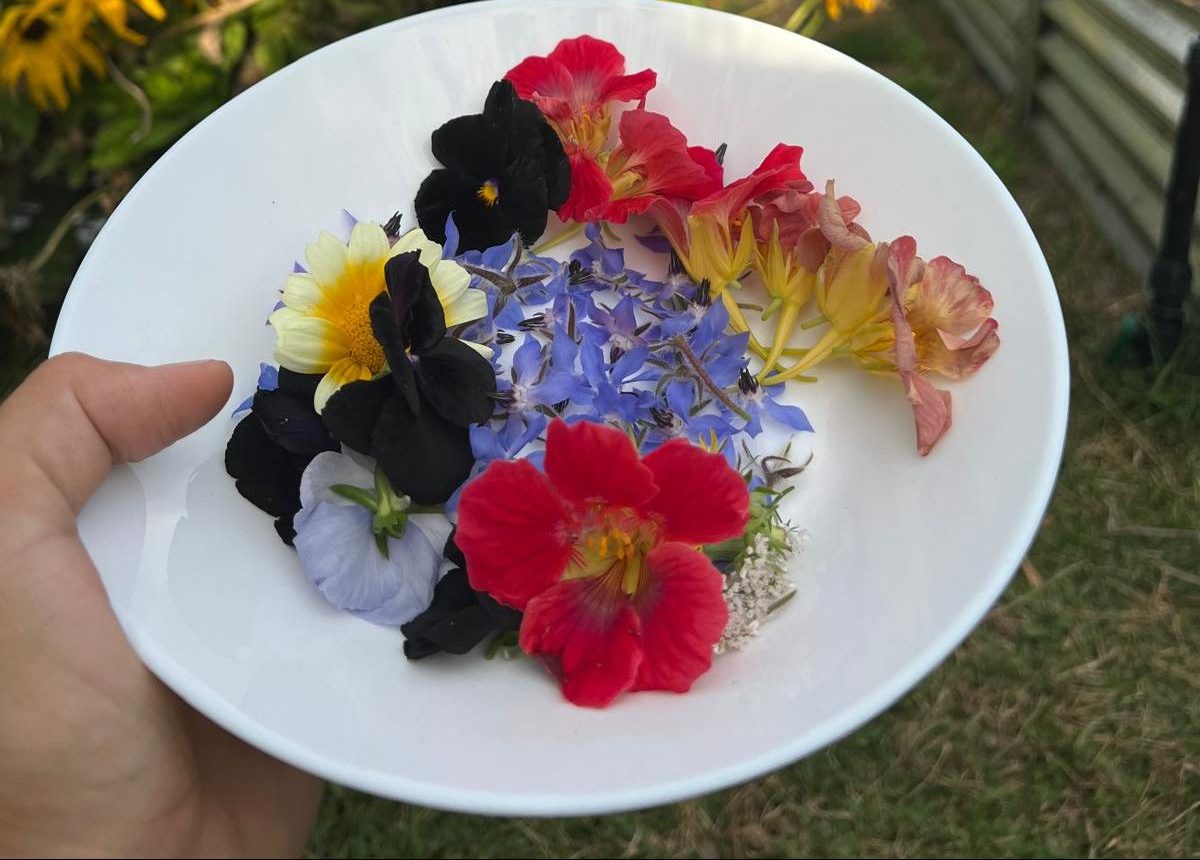
If you follow me on social media, you’ve probably seen my harvesting videos. Occasionally, I feature clips of me picking flowers without stems, which often prompts questions like, “How do you use the flowers?” or “Why are you removing them without the stem?” Many people don’t realize that numerous flowers are edible and taste delicious! These blooms can be used in various culinary dishes, adding both flavor and visual appeal.
Planting Tips
- Seed Selection: Choose high-quality seeds from reputable suppliers to ensure good germination rates and healthy plants. Look for varieties known for their flavor and suitability to your growing conditions.
- Preparation: Prepare the soil by loosening it and mixing in compost for nutrients.
- Planting: Sow seeds according to the depth and spacing recommended on the seed packet. Generally, small seeds should be planted shallowly, about 1/8 inch deep, while larger seeds can be planted 1/2 inch deep.
- Spacing: Ensure proper spacing between plants to allow for airflow and growth. Typically, this ranges from 6 inches to 1 foot apart, depending on the varieties.
1- Nasturtiums

Known for their bright colors and peppery taste, these flowers add a zesty kick to salads and garnishes.
- Sun: Full sun to partial shade.
- Water: Moderate; avoid overwatering.
- Season: Spring and fall (Can be grown throughout winter in mild climates)
- Ideal Temperature: 55-70°F
2- Pansy

With their mild, slightly sweet flavor, pansies are perfect for decorating cakes and desserts.
- Sun: Full sun to partial shade.
- Water: Regular watering, keeping soil moist.
- Season: Spring and fall. (Can be grown throughout winter in mild climates)
- Ideal Temperature: 45-70°F
3- Marigold

These vibrant flowers have a citrusy flavor that can be used in salads, soups, and rice dishes.
- Sun: Full sun.
- Water: Moderate; prefers well-drained soil.
- Season: Spring through fall.
- Ideal Temperature: 70-80°F
4- Dill

Subtle, fresh, and grassy taste with hints of anise and lemon.
- Sun: Full sun, 6-8 hours daily.
- Water: Moderate, keep soil moist but not waterlogged.
- Season: Best in spring and fall.
- Ideal Temperature: Prefers 60-70°F
5- Calendula

Often referred to as “poor man’s saffron,” calendula has a slightly peppery taste and can be used in salads, soups, and rice dishes.
- Sun: Full sun.
- Water: Moderate; keep soil well-drained.
- Season: Spring through fall (Grows better during cooler months in mild climates)
- Ideal Temperature: 60-70°F
6- Borage

With a cucumber-like flavor, borage flowers are great for adding a refreshing taste to salads and drinks.
- Sun: Full sun.
- Water: Regular watering, prefers well-drained soil.
- Season: Spring through winter
- Ideal Temperature: 65-85°F
7- Lavender

Known for its fragrant aroma, lavender adds a unique flavor to baked goods, teas, and savory dishes.
- Sun: Full sun.
- Water: Low to moderate; prefers well-drained, dry soil.
- Season: Spring through summer* (Lavender is often grown as perennial in many places)
- Ideal Temperature: 60-80°F
8- Chamomile

Flowers have a mild, apple-like flavor with subtle sweetness and floral notes.
- Sun: Requires at least 6 hours of direct sunlight daily.
- Water: Moderate but well-drained.
- Season: Spring and Fall (Grown during winter and spring in mild climates)
- Ideal Temperature: 60-68°F
9- Dandelion

Have a mild, apple-like flavor with a hint of sweetness and floral notes.
- Sun: Full sun to partial shade
- Water: Prefers moist soil but can tolerate some drought.
- Season: Spring and Fall
- Ideal Temperature: 50-75°F (10-24°C)

Special Considerations
Climate-Specific Tips
In humid climates, choose disease-resistant varieties and ensure good airflow to prevent fungal issues. In dry regions, focus on drought-tolerant varieties and provide consistent watering.
Indoor Growing
Edible flowers can be grown indoors in pots with adequate light. Use a south-facing window or grow lights to provide the necessary light levels. Regularly rotate the pots to ensure even growth.
Conclusion
Growing edible flowers is a rewarding way to add beauty and flavor to your garden. With proper planting, care, and harvesting, you can enjoy a bountiful supply of edible blooms. Start small, experiment with different varieties, and soon you’ll have a vibrant and tasty addition to your culinary creations.