Introduction
Ever wonder how you can turn worm poop into garden gold? No, this isn’t the start of a weird fairy tale, but rather a gardener’s secret weapon: earthworm castings (click here to buy). Castings, or worm poop is one of my favorite garden amendments! In fact, if I had more space, I would probably invest in a much bigger worm farm than the small indoor one I currently have. Let’s dig into the world of worms and why you might want to get some worms -no pun intended-.
What are Earthworm Castings?
Worm castings, often referred to as “black gold,” are the nutrient-rich excrement produced by earthworms after they digest organic matter, aka worm poop. These castings are a powerful natural fertilizer packed with essential nutrients like nitrogen, phosphorus, and potassium, as well as beneficial microbes that enhance soil health. As worms digest food, they break down complex nutrients into more bioavailable forms, resulting in a highly fertile, crumbly substance that significantly boosts plant growth and soil quality. This process, known as vermicomposting, creates optimal soil enrichment that improves aeration, drainage, and water retention.
Benefits of Using Earthworm Castings and Why Should You Use Worm Castings
Nutrient-Rich Fertilizer: Worm castings are packed with essential nutrients such as nitrogen, phosphorus, and potassium, providing balanced nutrition for plants.
Enhanced Soil Structure: The castings improve soil aeration, drainage, and water retention, creating an optimal growing environment.
Beneficial Microbes: They contain beneficial microorganisms that help break down organic matter, making nutrients more available to plants and promoting healthier soil.
Disease Resistance: Plants grown in soil enriched with worm castings show increased resistance to diseases and pests.
Natural and Organic: As a natural fertilizer, worm castings are environmentally friendly and safe for use around pets and children. Also, when having a worm bin you reduce the amount of food waste going to landfills!

How Earthworm Castings Are Made
The process begins with setting up a worm bin, which can be as simple as a plastic container with drainage holes. The bin is filled with bedding material such as shredded newspaper, cardboard, or coconut coir, which provides a comfortable habitat for the worms.
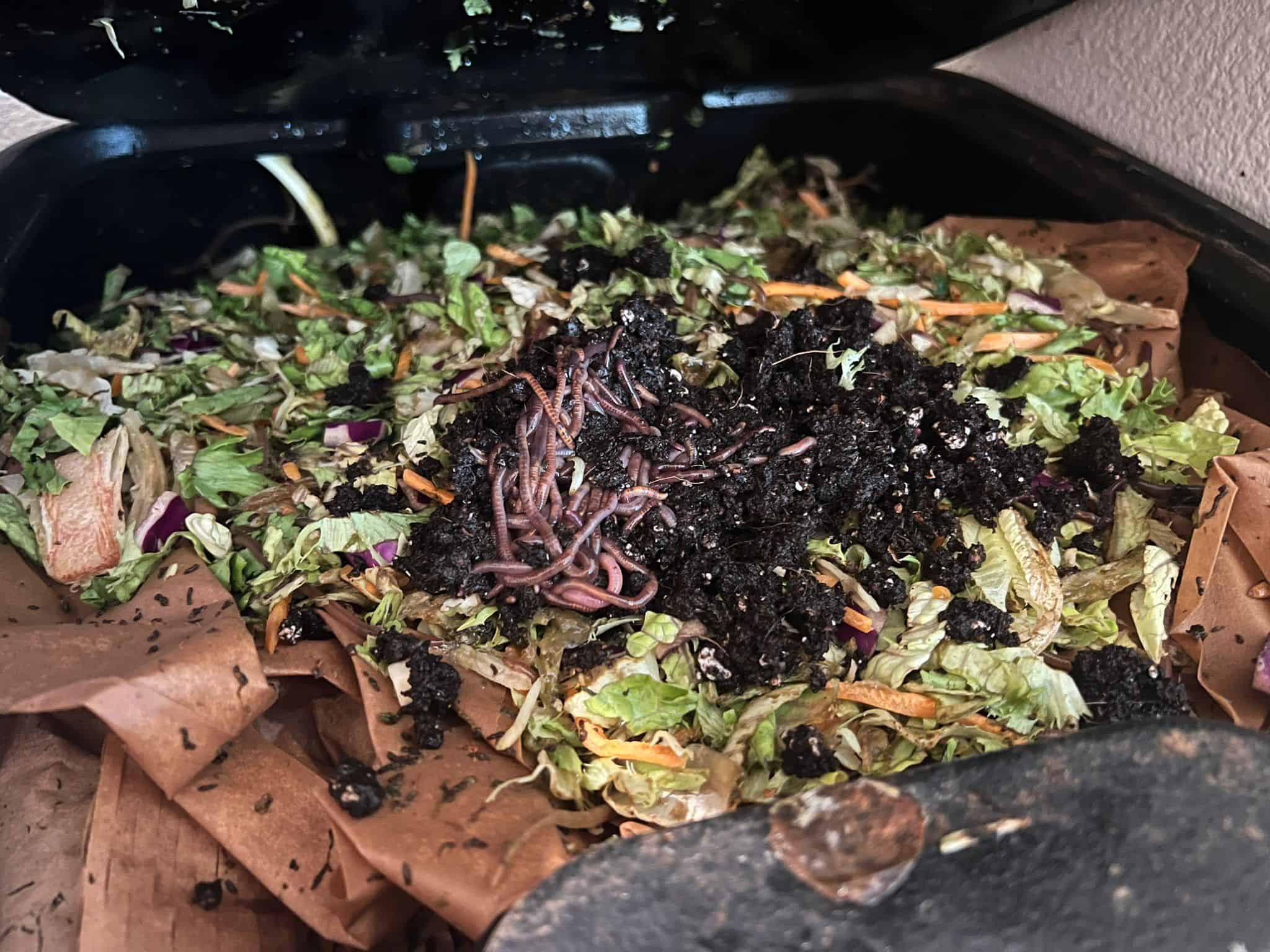
Red wigglers (Eisenia fetida) (click here to buy) are the most common worms used in vermiculture due to their voracious appetite and efficiency in producing castings. They are fed organic waste like fruit and vegetable scraps, coffee grounds, and crushed eggshells, avoiding meat, dairy, oily foods, and citrus. As they digest this material, they excrete nutrient-rich castings that enhance soil fertility and structure. Once the castings are ready, they are harvested through methods like light harvesting or screening. The castings are then used as a soil amendment or to make compost tea, while the worms are returned to fresh bedding and food to continue the cycle.

Ready to use worm casting on the bottom of my worm bin.
How Much Worm Castings to Use
Using the right amount of worm castings ensures optimal benefits for your plants:
- Soil Amendment: Mix 10-20% worm castings by volume into the soil. For garden beds, incorporate 1-2 inches of castings into the top 6-8 inches of soil.
- Top Dressing: Apply 1/2 to 1 inch of worm castings around the base of plants, gently working them into the top layer of soil. Repeat every 2-3 months during the growing season.
- Seed Starting: Mix 1 part worm castings with 2-3 parts potting soil to provide a nutrient-rich medium for seedlings.
- Compost Tea: Steep 1 cup of worm castings in 1 gallon of water for 24 hours, then use the liquid to water plants or as a foliar spray.
Where Can I Buy Worm Castings?
I have personally used bagged worm casting a few times before I had my own bin. Coast of Maine and Wiggle Worm are two reputable sellers that I have had a great experience with. However, I do recommend having your own bin to harvest worm casting if you have the space or opportunity to do so. By having your own bin, you can ensure freshness and exactly what is being added to it. Having worms is probably the easiest part of the garden world, in my opinion!

Setting Up a Worm Bin: Step-by-Step Instructions
- Choose a Container: Select a plastic or wooden bin with a lid. Drill small holes in the bottom and sides for ventilation and drainage.
- Prepare Bedding: Shred newspaper, cardboard, or coconut coir and soak in water until moist but not dripping. Fill the bin about one-third full with the bedding.
- Add Worms: Introduce red wigglers (Eisenia fetida) to the bin. One pound of worms (approximately 1,000 worms) is ideal for a small household bin.
- Feed the Worms: Bury small amounts of kitchen scraps (fruits, vegetables, coffee grounds) under the bedding. Avoid meat, dairy, oily foods, and citrus.
- Cover Food: Add a layer of damp newspaper or cardboard on top to reduce odors and discourage pests.
- Place the Bin: Keep the bin in a dark, cool location, such as a basement or garage, maintaining a temperature between 55-77°F (13-25°C).
Maintenance Tips
- Feeding: Feed the worms once a week, burying food scraps in different locations each time. Start with small amounts and adjust based on how quickly the worms consume the food.
- Moisture Control: Maintain bedding moisture like a wrung-out sponge. If it’s too dry, sprinkle water; if too wet, add dry bedding.
- Aeration: Gently fluff the bedding periodically to improve airflow and prevent anaerobic conditions.
- Harvesting Castings: Every 3-6 months, separate the castings from the worms using methods like light harvesting or screening. Add fresh bedding and continue feeding.
- Pest Control: Monitor for pests like fruit flies or mites. Avoid overfeeding and keep the bin covered to minimize issues.

- Conclusion
In this post, we covered the basics of earthworm castings, highlighting their role as a nutrient-rich, natural fertilizer produced by worms. We explained the process of vermiculture, including setting up and maintaining a worm bin, and discussed the benefits of using castings, such as improved soil health, enhanced plant growth, and increased disease resistance. Using earthworm castings in your garden is a simple and effective way to boost plant health and soil quality.